
This video focuses on the Discover strand, which is about finding out or trying something new. Discovering helps build confidence, self-esteem and a sense of purpose, while encouraging perseverance and a growth mindset.
year: Stage 2
Knowledge organiser – Computing S2: How computers work
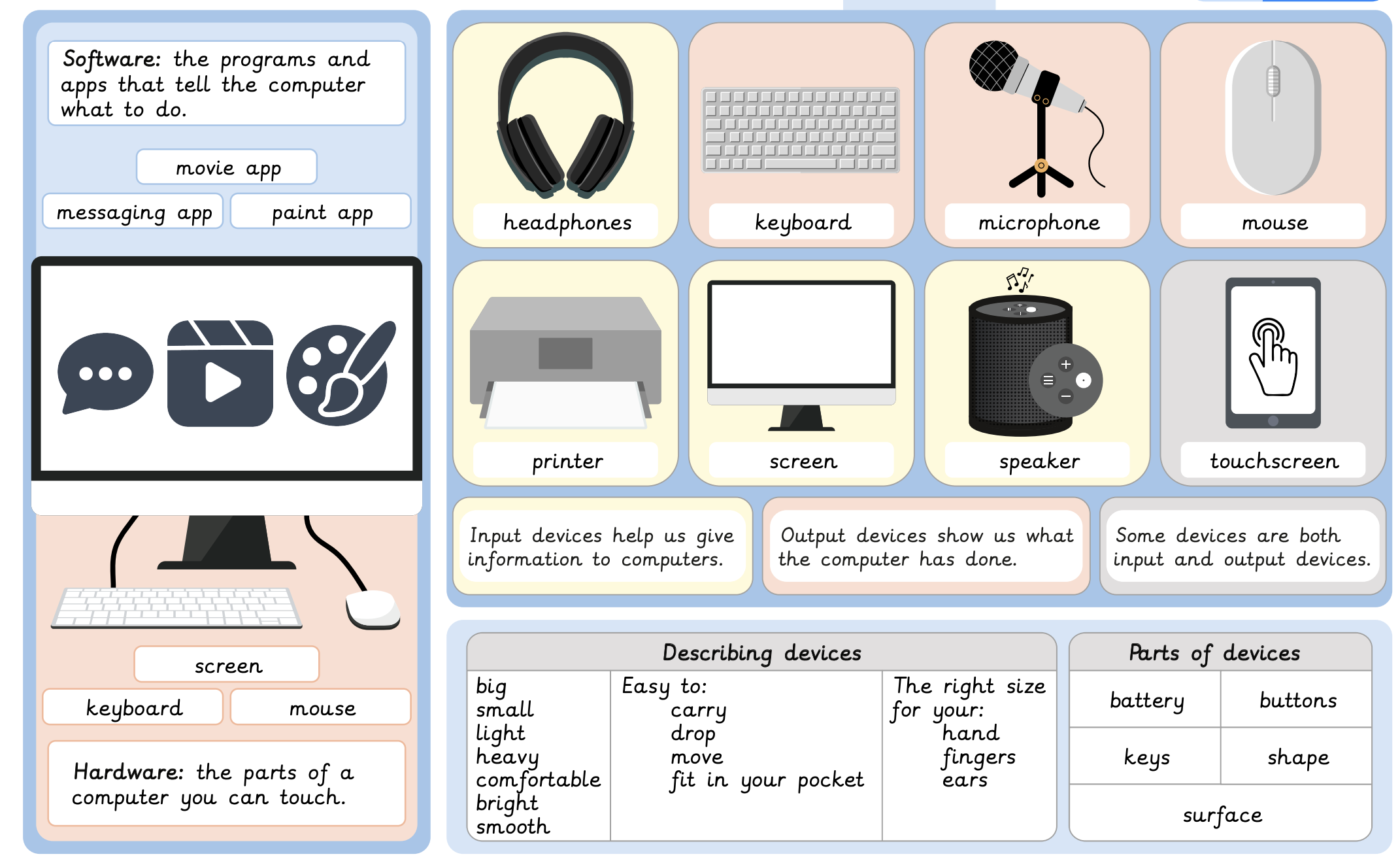
A Knowledge organiser that captures the essential knowledge and skills learned throughout the Stage 2 Computing unit, How computers work.
This Computing resource is designed to support children as they learn what software and hardware is, the difference between input and output devices and the features of these devices. They find out which jobs computers do better than people and identify the differences between real and fictional robots.
Vocabulary display – Computing S2: How computers work
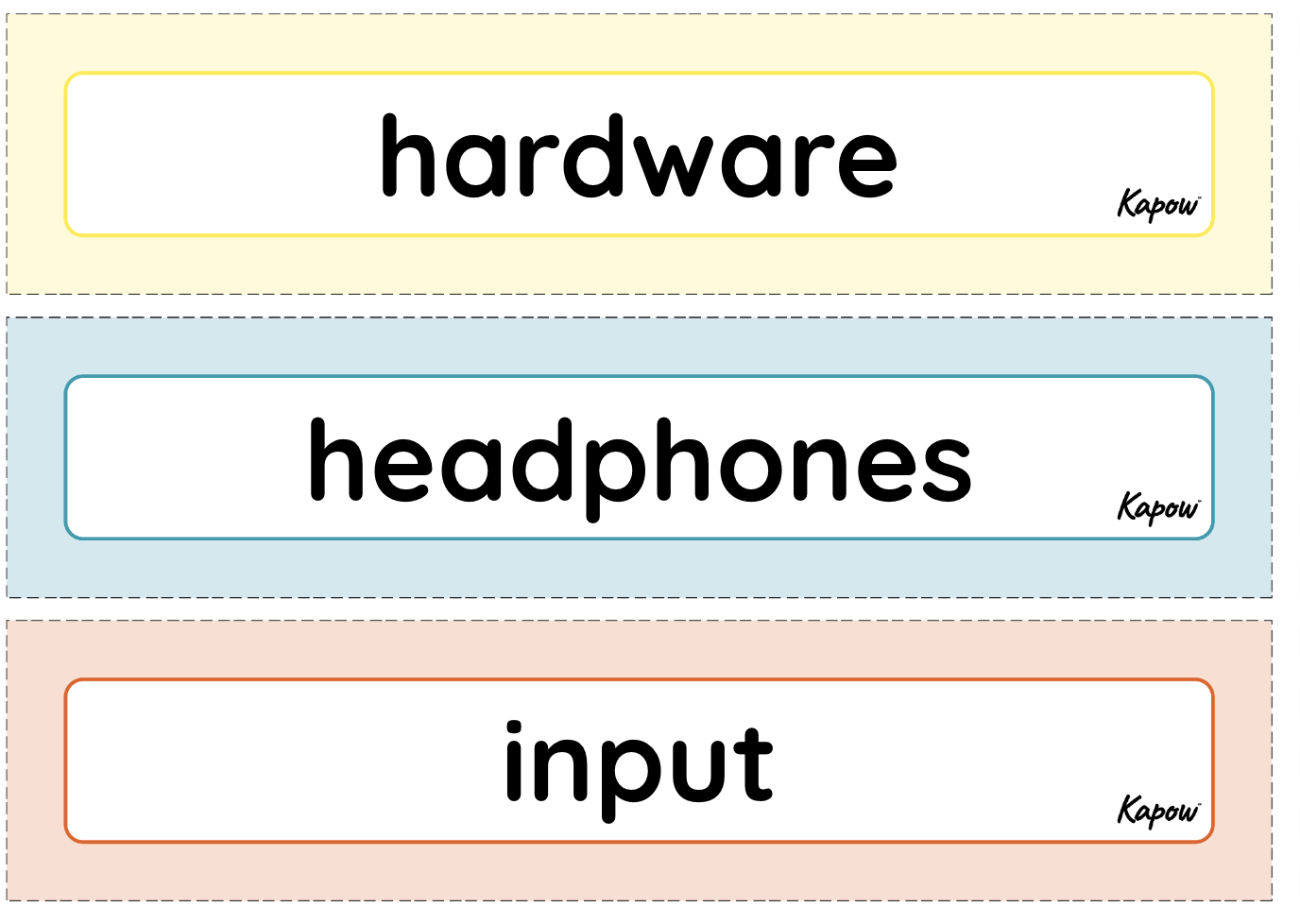
This unit vocabulary includes keywords from the Stage 2 unit How computers work and additional unit-specific words that may be helpful in a display.
Introduction to Cambridge Primary Art & Design
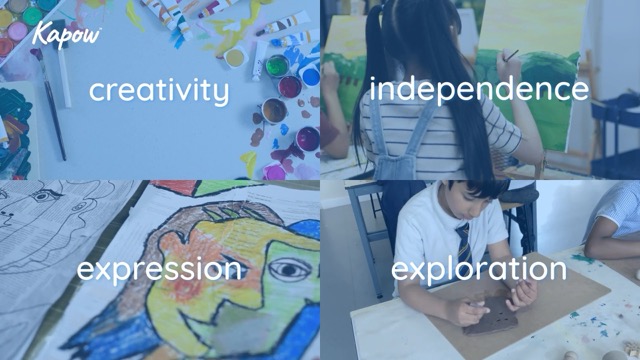
The Kapow Art and Design scheme is built on the belief that art is more than a subject—it’s a way of thinking, exploring, and expressing. Fully aligned with the Cambridge Primary Art and Design curriculum, it emphasizes creativity, independence, expression, and exploration.
The scheme includes detailed lesson plans, interactive presentations, learner and teacher videos, printable materials, and examples of artists from diverse cultures and time periods. Learners engage in experimenting, making, reflecting, and thinking artistically, which mirrors how real artists work.
Through this process, children develop confidence, problem-solving skills, innovation, and self-expression. Teachers are supported with flexible resources, guidance notes, and assessment tools, encouraging adaptability to different contexts.
Ultimately, Kapow’s approach nurtures resilient, reflective, and creative learners who think and work like artists.
Knowledge organiser – Computing S2: Block coding
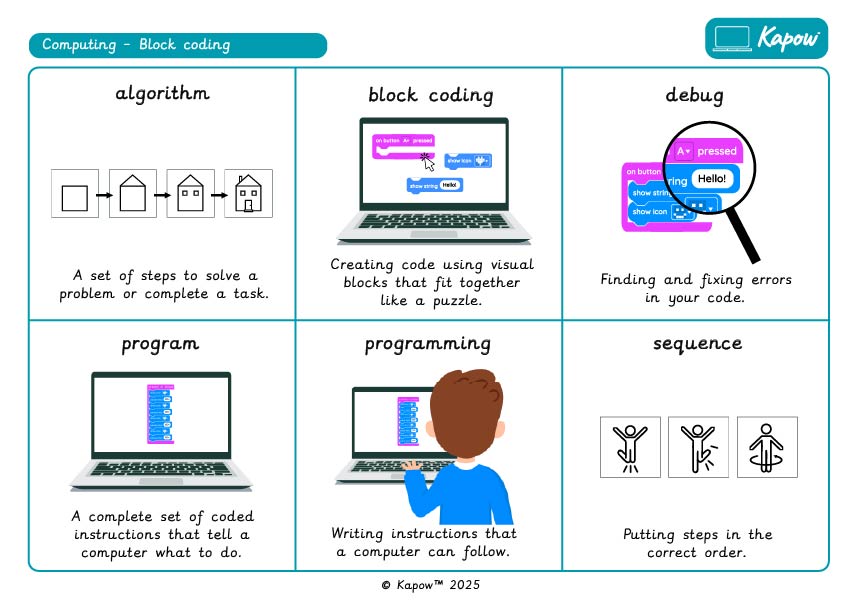
A Knowledge organiser that captures the essential knowledge and skills learned throughout the Stage 2 Computing unit, Block coding.
This Computing resource is designed to support children as they learn how to create programs using block coding in MakeCode. It highlights key vocabulary, commands and concepts, such as algorithms, sequences, debugging and using a BBC micro:bit to display patterns and messages. It helps learners consolidate their understanding of programming and develop confidence in building and testing their own interactive projects.
Vocabulary display – Computing S2: Block coding
This unit vocabulary includes keywords from the Stage 2 unit: Block coding and additional unit-specific words that may be helpful in a display.
Getting started with Kapow

This video introduces teachers to Kapow, offering a guided overview of how to navigate the website and access key features. It demonstrates how to find and use subject pages, unit hubs, lesson plans and presentations, as well as how to personalise teaching and stay up to date with evolving resources. The video aims to help teachers feel confident and supported in using Kapow’s planning tools and classroom materials.
Teacher skills video: Introduction to visual journals
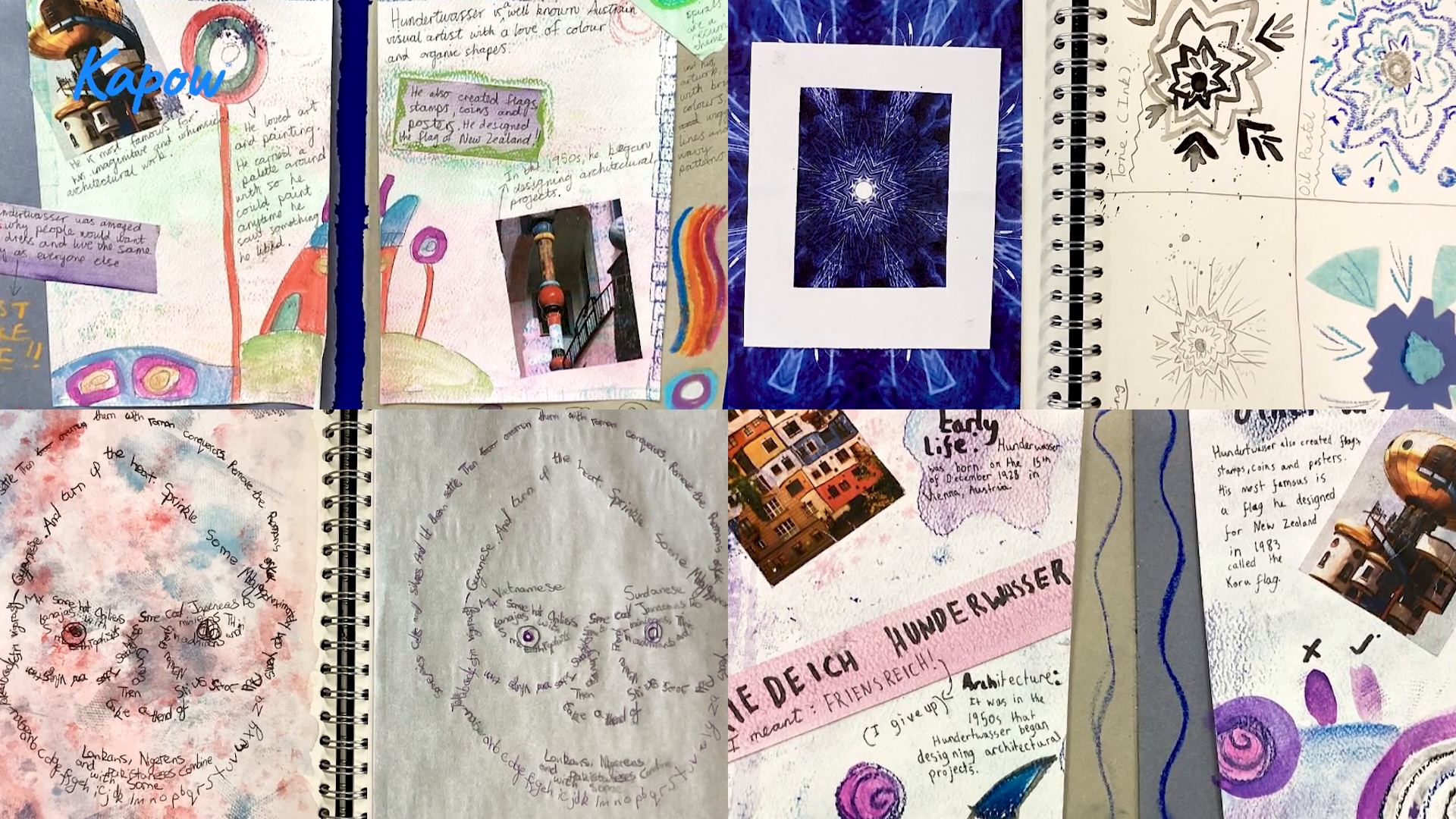
This Art and design video introduces teachers to the use of visual journals across all stages of learning. It explains how visual journals can support creativity, reflection and skill development by providing learners with a personal space to explore materials, record ideas and document progress throughout the artistic process.
Art and design: Long-term plan

Our approach
This printable PDF document provides a detailed overview of the Kapow Art and design scheme of work, designed to support the teaching of the Cambridge Primary Art & Design curriculum across Stages 1, 2, 3, 4, 5 and 6. It helps teachers confidently deliver a well-structured, engaging and aligned art scheme.
What does Kapow’s Art and design long-term plan contain?
The long-term plan outlines the units and objectives covered in Art and design.
It covers the requirements of the Cambridge Primary Art & Design curriculum, offers guidance on assessment and provides information to support the implementation of the scheme within your school setting.
Can I adapt the long-term plan?
All schools have different needs. As such, units 1-4 in all stages can be taught in different orders or moved to align with your school’s specific requirements.
It is advised that Unit 5 (Art and design skills) and Unit 6 (Making connections) are taught towards the end of the year as they are designed to support learners in consolidating and applying skills from previous units.
