
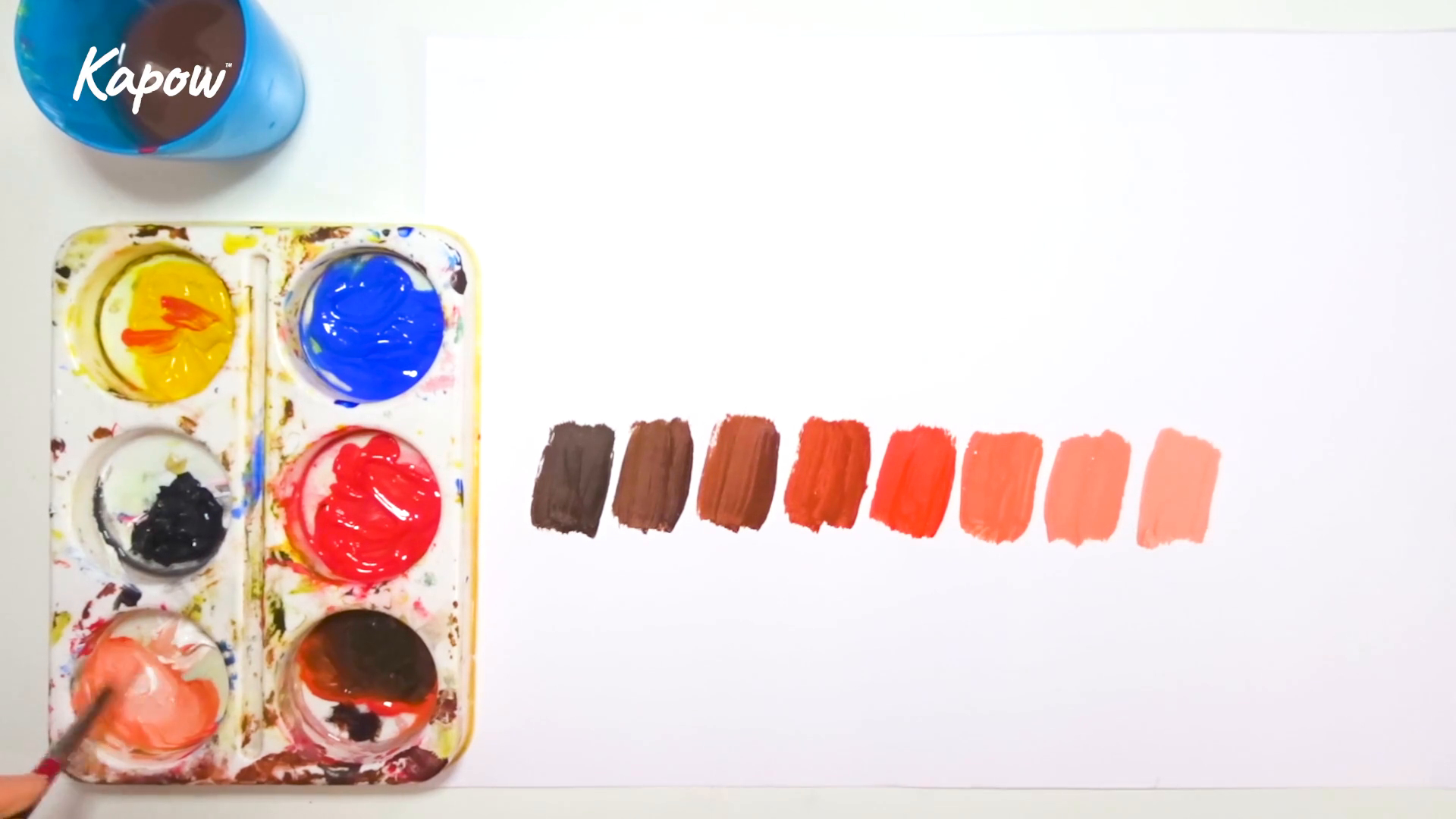
This Art and design video introduces learners to the concepts of tints and shades by guiding them through the process of mixing paint with black and white. They apply their paint to visual journal pages, gradually adjusting the tone to develop a wider colour range and begin to understand how these changes can affect mood, depth and form.
year: Stage 4
Learner video: Layering colour
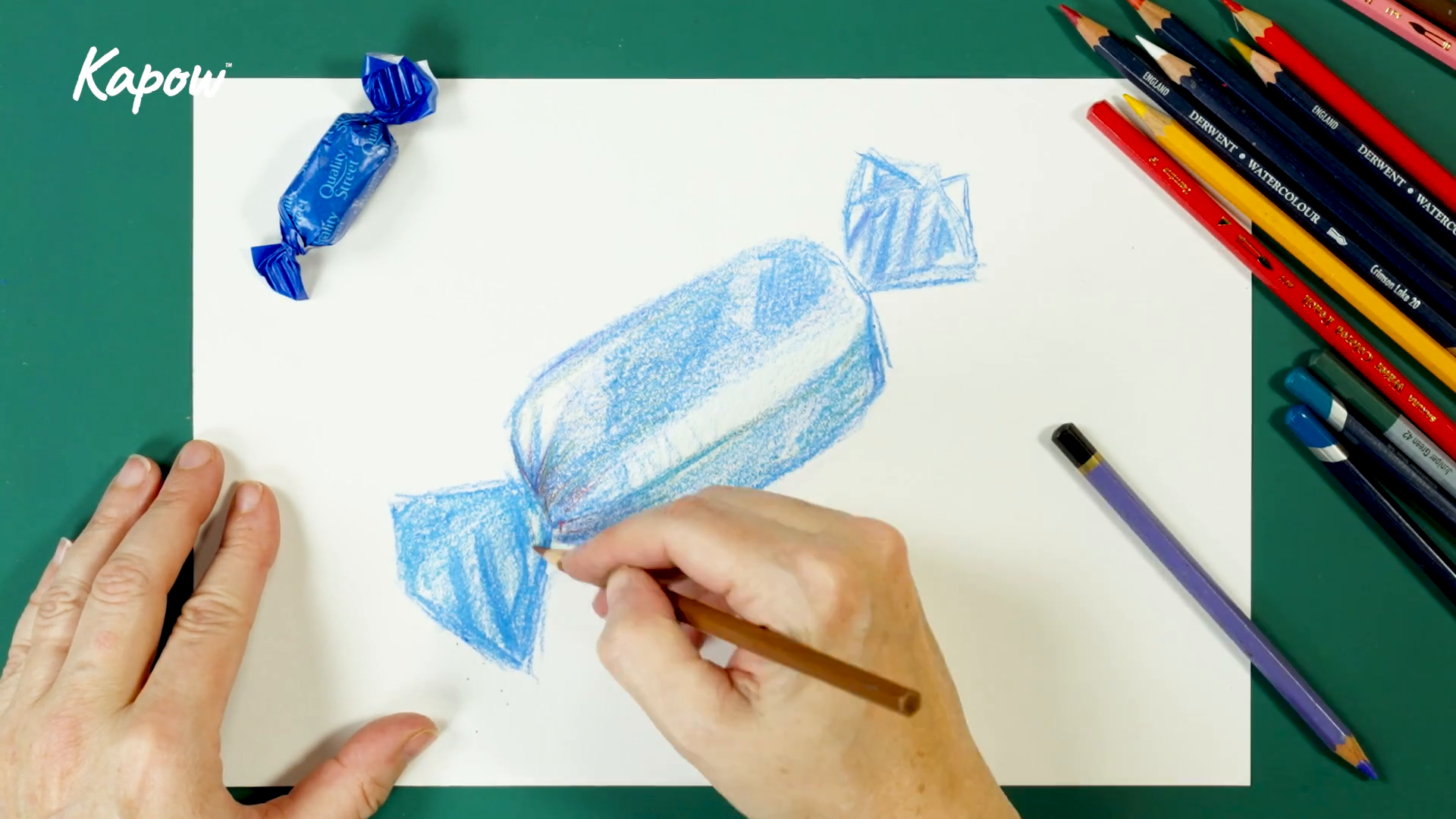
This Art and design video demonstrates how to enhance drawings by layering coloured pencils to create rich tones and depth. The activity encourages learners to experiment with blending pressure and shading direction to achieve realistic textures and effects.
Learner video: Effective composition
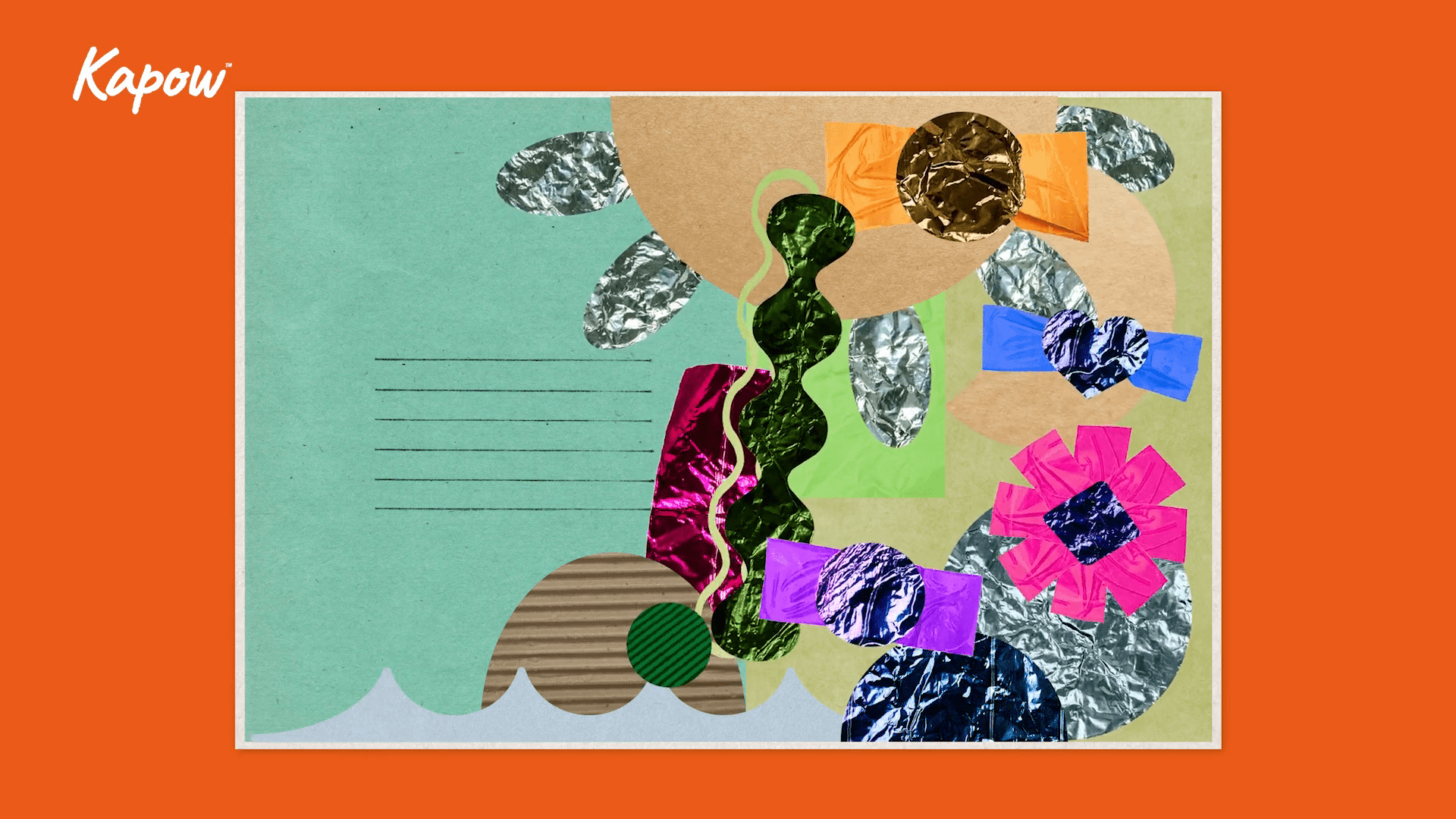
This Art and design video demonstrates how to create an effective collage composition using balance focal points and layout. The activity encourages learners to experiment with cutting tearing layering and arranging shapes colours and textures to guide the viewer’s eye.
Learner video: What is proportion?
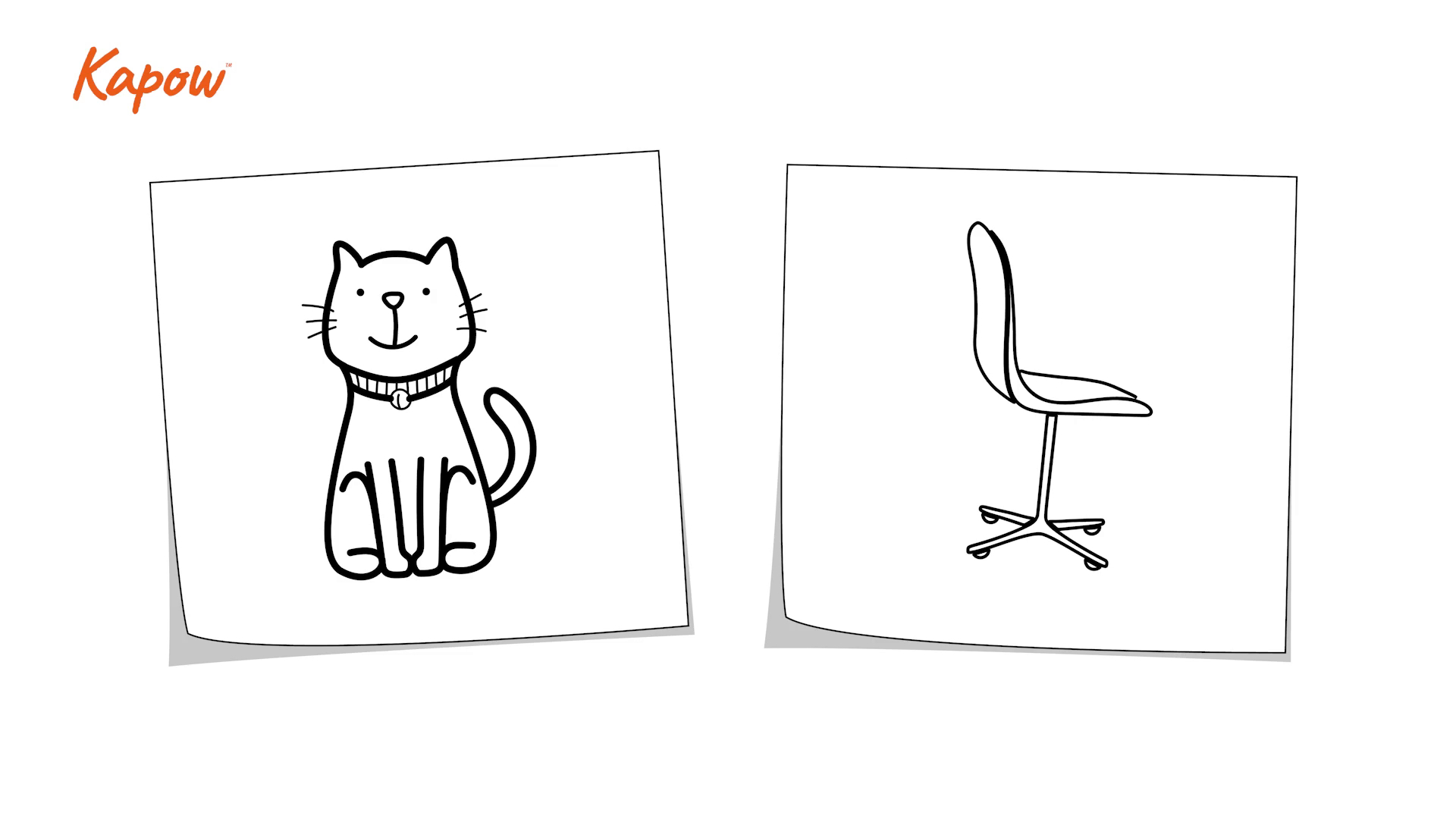
This Art and design video introduces learners to the concept of proportion and explains why getting proportion right can help make drawings look more realistic and balanced. Through observation and examples, learners explore how to judge size relationships and how artists can play with proportion creatively for effect.
Learner video: Showing texture and tone
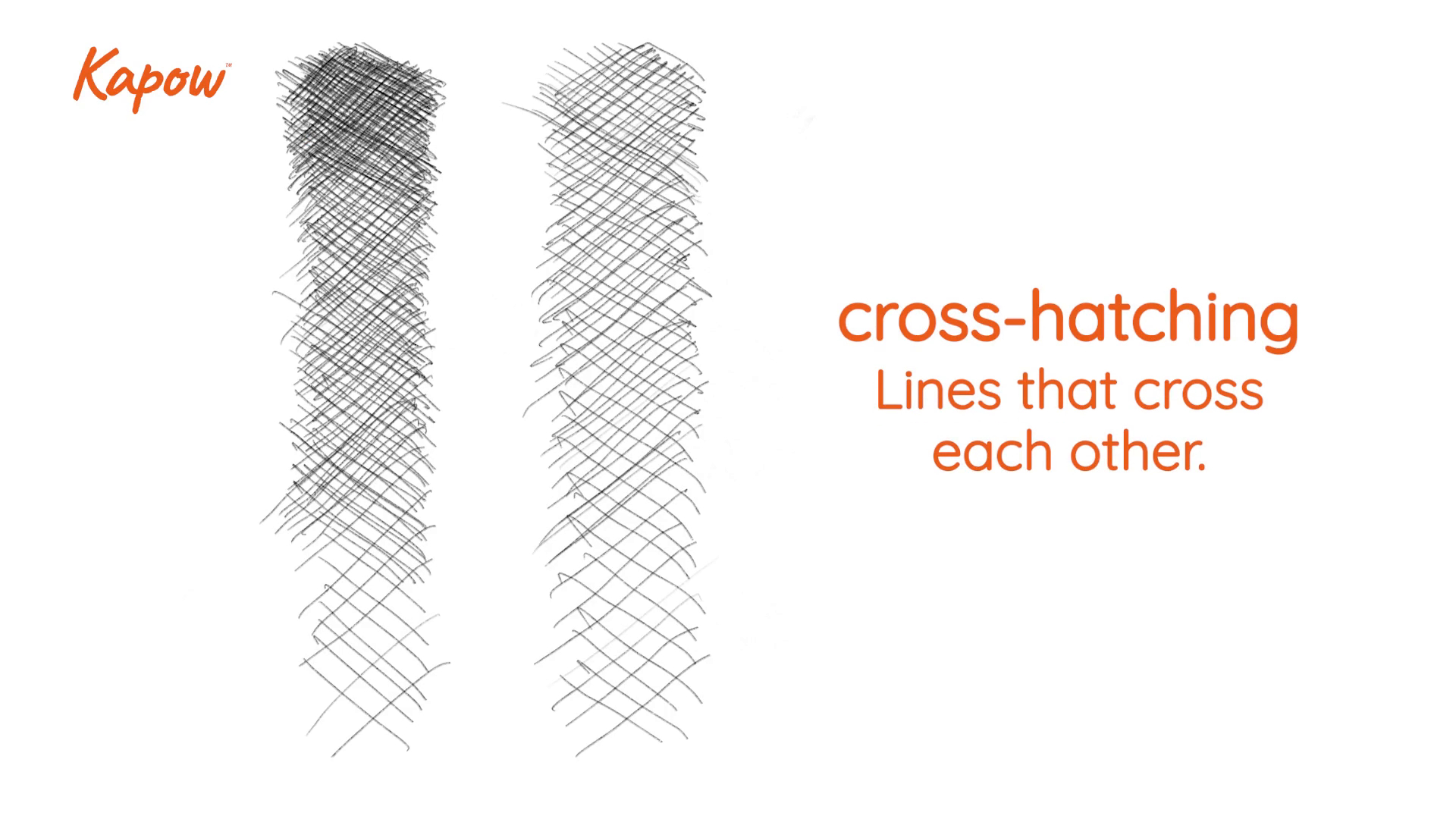
This Art and design video demonstrates how to use lines marks and patterns to show texture and tone in drawings. The activity encourages learners to experiment with techniques like crosshatching to suggest light shadow and surface qualities for more realistic artwork.
Learner video: Light and dark

This Art and design video demonstrates how to use tone and shading to make drawings look three-dimensional. The activity encourages learners to observe light and shadow experiment with line pressure and use erasing to create highlights and realistic form.
Teacher video: Drawing with realism
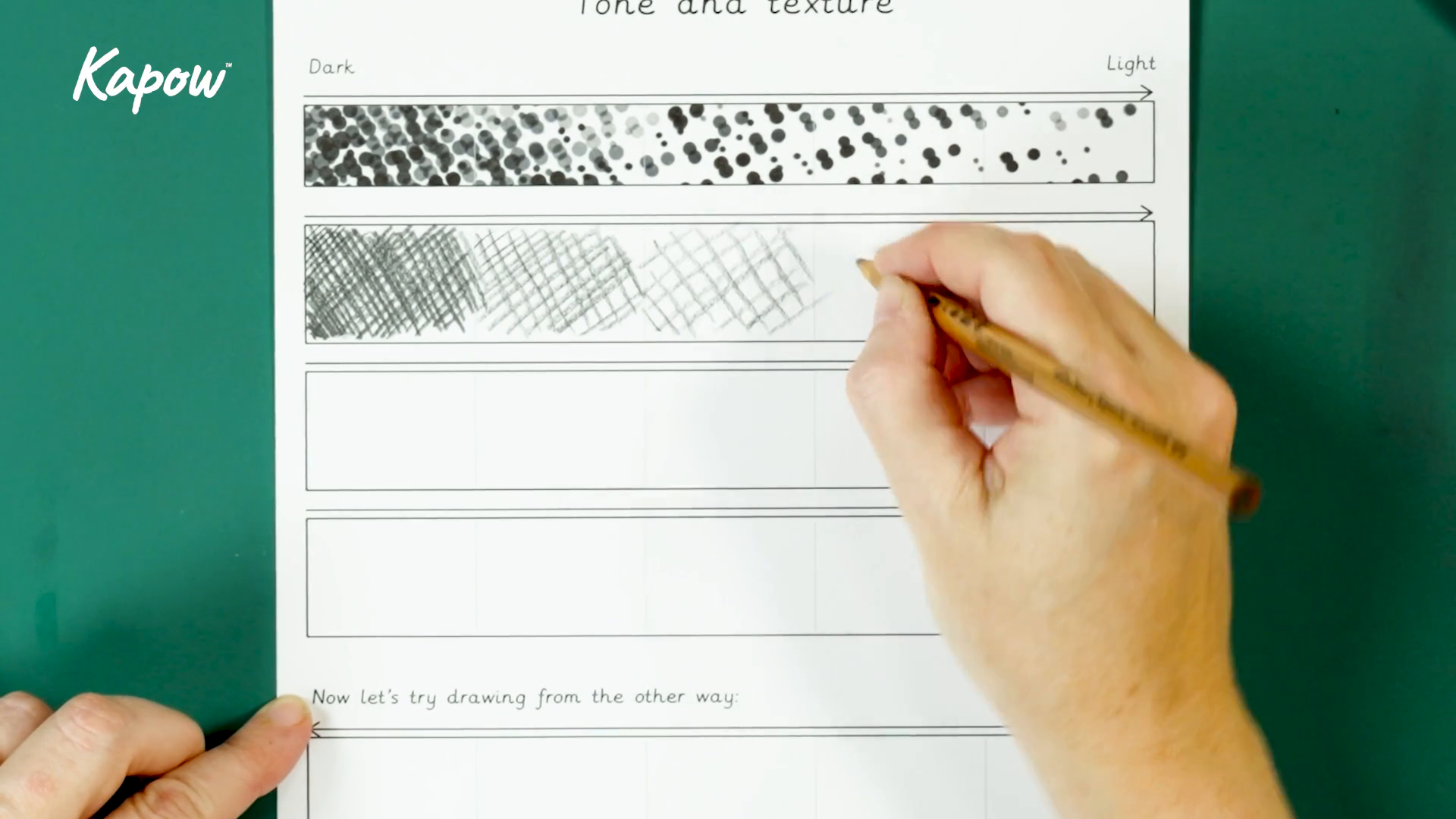
This Art and design video supports teachers in guiding learners to develop greater control in tonal shading and mark making. Learners build their understanding of proportion and spatial relationships as they compare scale and placement in their drawings.
Art and design: Long-term plan

Our approach
This printable PDF document provides a detailed overview of the Kapow Art and design scheme of work, designed to support the teaching of the Cambridge Primary Art & Design curriculum across Stages 1, 2, 3, 4, 5 and 6. It helps teachers confidently deliver a well-structured, engaging and aligned art scheme.
What does Kapow’s Art and design long-term plan contain?
The long-term plan outlines the units and objectives covered in Art and design.
It covers the requirements of the Cambridge Primary Art & Design curriculum, offers guidance on assessment and provides information to support the implementation of the scheme within your school setting.
Can I adapt the long-term plan?
All schools have different needs. As such, units 1-4 in all stages can be taught in different orders or moved to align with your school’s specific requirements.
It is advised that Unit 5 (Art and design skills) and Unit 6 (Making connections) are taught towards the end of the year as they are designed to support learners in consolidating and applying skills from previous units.
Vocabulary display – Art and design S4: Sculpture and 3D: Mega materials
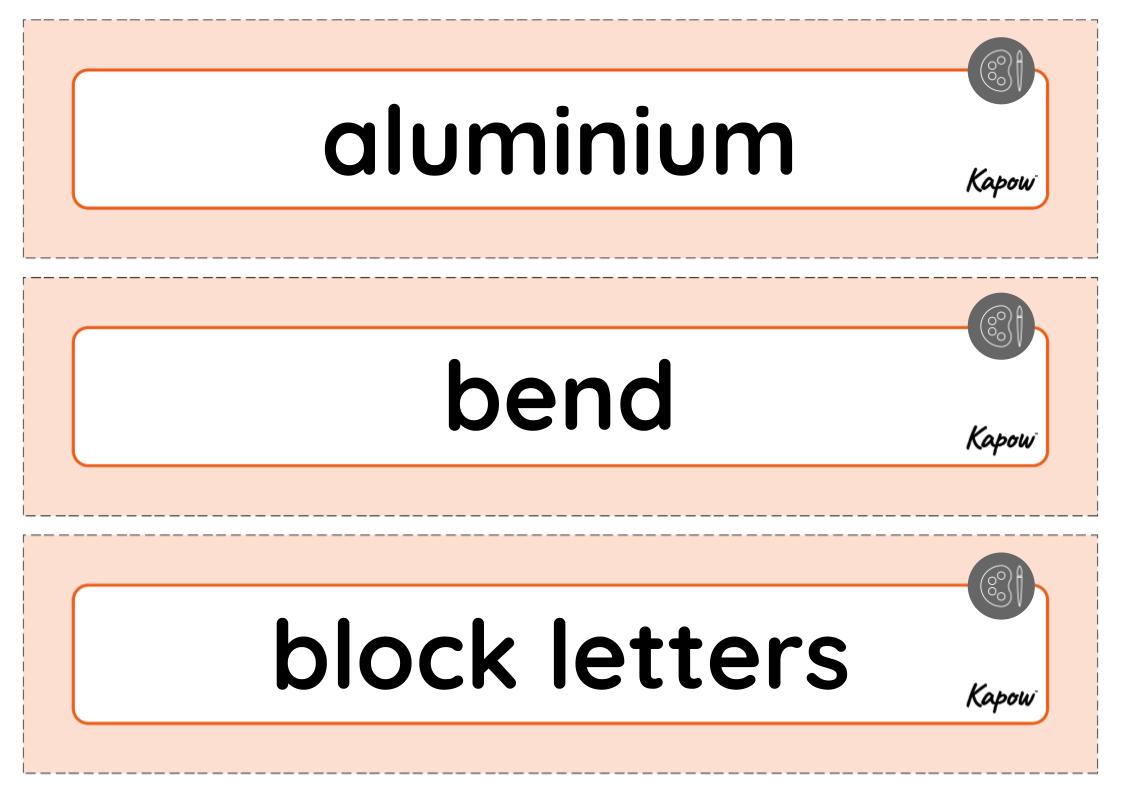
This unit vocabulary includes keywords from the Stage 4 unit Sculpture and 3D: Mega materials and additional unit-specific words that may be helpful in a display.
