


Learning intention
- To use data to help decide which type of robot to design.
Success criteria
- I can write a question with four possible

We do not currently offer this subject
Cambridge Primary Computing (0059) Learning objectives
Managing data
2MD.01 Know the advantages of
We do not currently offer this subject
Before the lesson
We do not currently offer this subject
Lesson plan
Recap and recall
Show the Presentation: Robots in the real world, which shows examples of robots from the previous lesson.
This content is for subscribers only. Join for access today.
Extended-mode explainer videos
How to extend your display to view the lesson page and preseantion mode simultaneously. Choose your operating system below to watch the video
If you need further support with extending your display,
please contact [email protected].
Differentiation
Learners needing support:
- Could create a pictogram by glueing the robot pictures from the Activity: Robot icons (support) onto paper.
- Could offer three answer options rather than four to their survey questions to make the data easier to handle.
Learners working at a stretch:
- Should complete both a pictogram and a bar chart to present their data.
- Could include an extra answer option in their survey and present their data on squared paper rather than using the template provided.
We do not currently offer this subject
Assessing progress and understanding
Learners with secure understanding can:
- Write a question with four possible answers to
We do not currently offer this subject
Vocabulary definitions
-
data
Single facts or short pieces of information that can help us find things out.
-
bar chart
A chart made with bars.
We do not currently offer this subject
In this unit
Lesson 1: How robots work

Lesson 2: Data for decisions
Lesson 3: Designing a robot
Lesson 4: Programming Bee-Bots
Lesson 5: Robot algorithms

Maintained by: Kapow Primary team
Last update: 29th December, 2025
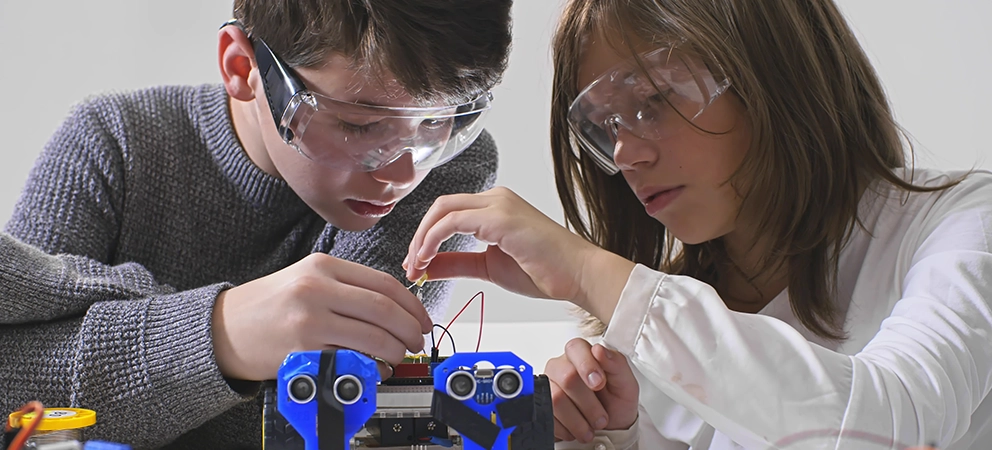
Lesson 3: Designing a robot
Designing a robot with the right shape, size and parts for its job.

Lesson 1: How robots work
Identifying jobs robots do and different input and output devices they use to help them...

Lesson 4: Programming Bee-Bots
Turning algorithms into commands to program a Bee-Bot.

Lesson 5: Robot algorithms
Creating algorithms for their own robots; testing and debugging the algorithms.
